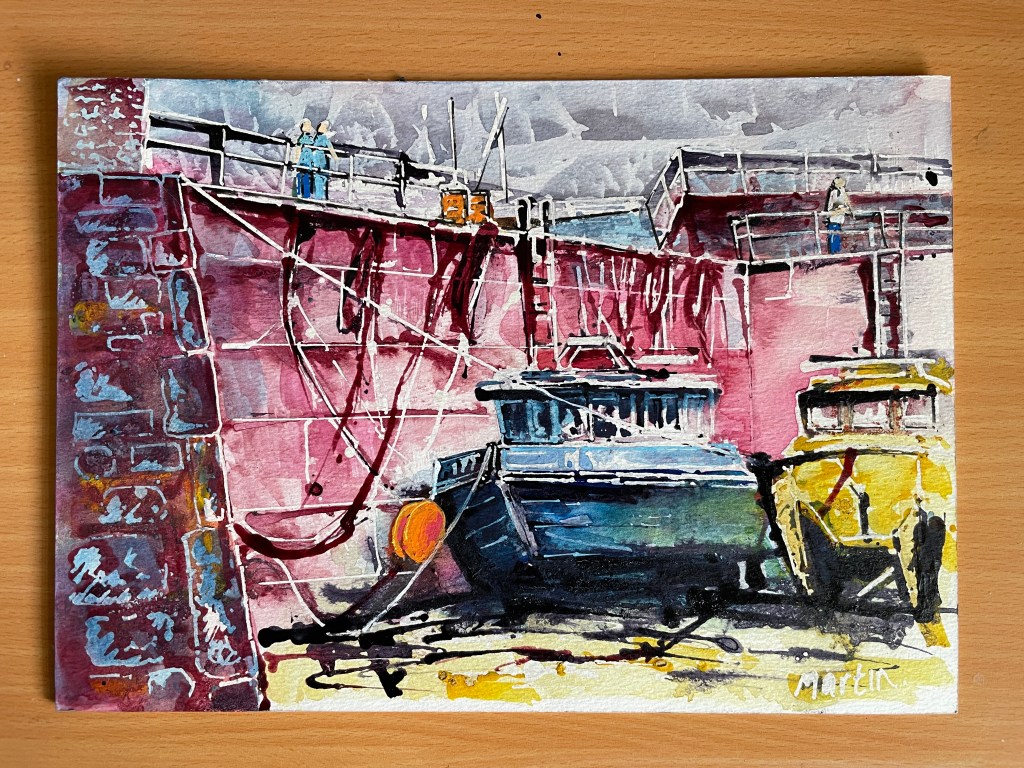
I’m not a fan of masking fluid in watercolour paintings, but I see people use it to create some fantastic art. I decided to change my attitude by attending a workshop specifically using the dreaded liquid latex.
Before I start, these are my issues with masking fluid.
- Applying masking fluid ruins my brushes.
- Getting masking fluid off a painting hurts my fingers.
- The stark white paper that it leaves behind looks out of place with the rest of the image.
Cathy Read was the tutor of the workshop. Cathy appeared on Landscape artist of the Year and in her own words – ‘I’m here to champion masking fluid and change the worlds attitude to masking fluid, one artist at a time.’ A perfect teacher for a cynical masking fluid hating artist, like me.
Applying masking fluid ruins my brushes
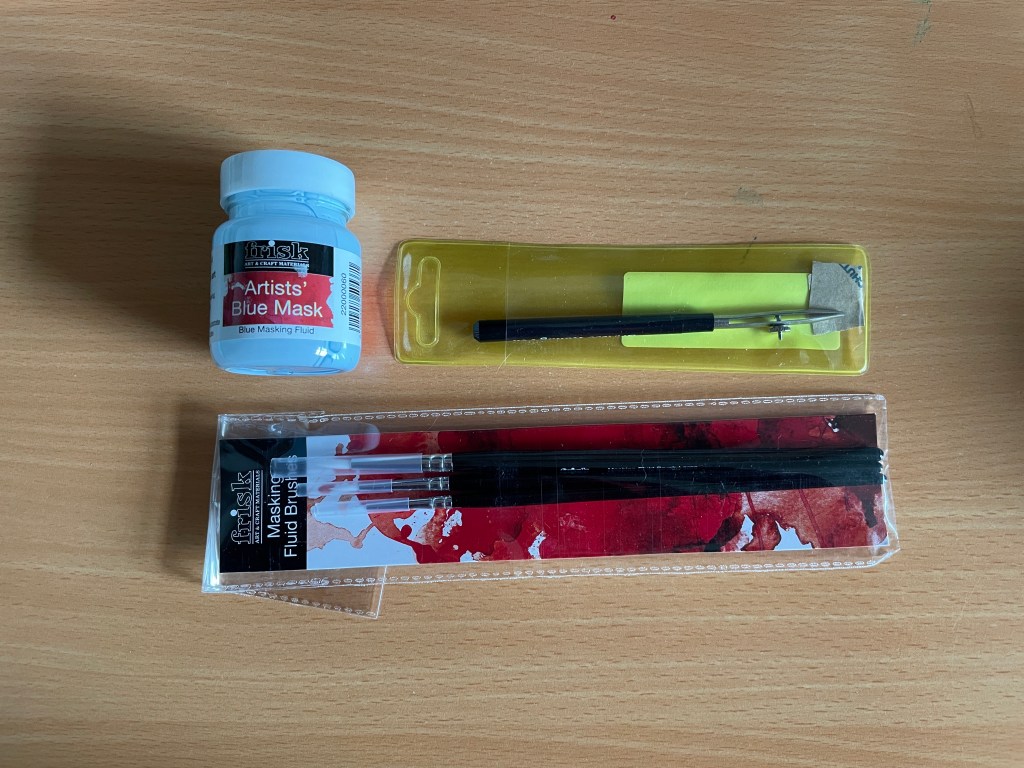
While I have been struggling applying masking fluid with old brushes, using soap to stop it sticking to the bristles, trying to get clean lines, and embracing splodges. Cathy has been using an old school ruling pen – achieving marvellous lines and beautifully masked areas.
Using a ruling pen is easy. Tip some masking fluid into an old bottle top and dip your ruling pen into the liquid and apply. Beware to clean the edges with your finger or the liquid builds up on the outer edges of ruling pen and creates larger than intended lines.
Cathy’s Method
Using stretched watercolour paper Cathy had drawn out her image and added masking fluid to the line work of her image. With a sponge Cathy then wet the entire piece of paper and applied a generous watercolour wash over the whole picture. Cathy then added cling film and scrunched it up to create textural areas across the page. This was then left to dry for about 10 minutes.
The magic of Cathy’s image is in the use of ink. This is applied with the pipette of the ink bottle and controlled with salt and water spray. If the ink is running out of control, Cathy adds salt and if the ink is not flowing then she mists the paper with a water spray.
You can see Cathy in action in this Youtube video.
Getting masking fluid off a painting hurts my fingers
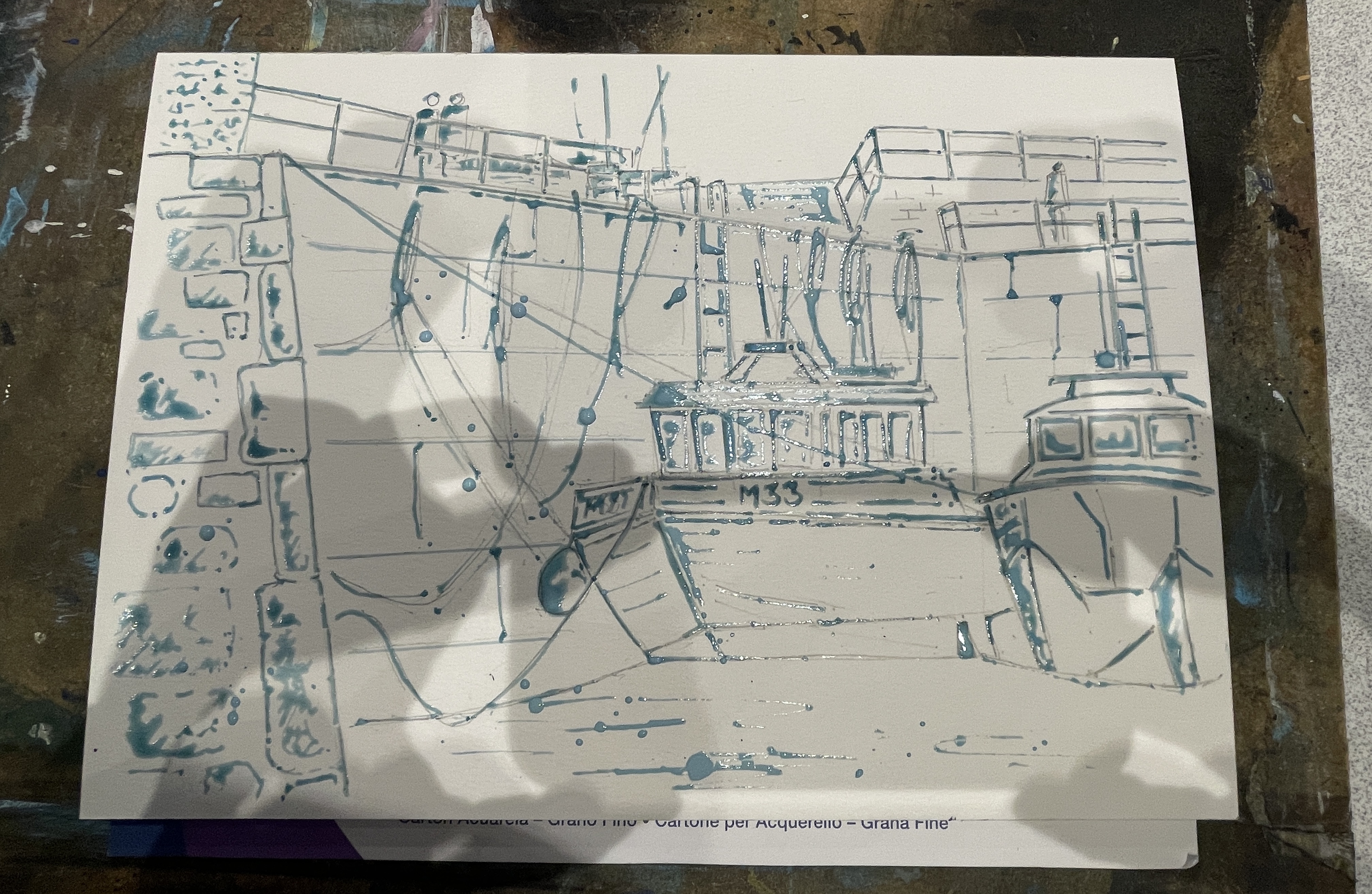
And so, we all set about creating our images. Applying masking fluid to our pencil lines, washing the sheet of paper with watercolour, and adding ink to the image. I have to admit that I enjoyed adding masking fluid to my image. The ruling pen was satisfying to use. I didn’t wipe the excess fluid off the pen but this didn’t seem to affect the lines I was making.
I added copious amounts of ink. Building up areas of darkness around the masked areas, in the hope that when I rubbed the masking fluid away, I would end up with gorgeous lines on my painting.
It took ages for the ink to dry. I’m not a patient person and yes, I did remove some of the masking fluid before the ink was dry. I used my finger. Cathy uses the left over masking fluid, left to dry in her masking fluid palette as a rubber to gently tease the masking fluid away. I tore a bit of my painting.
Stark white paper
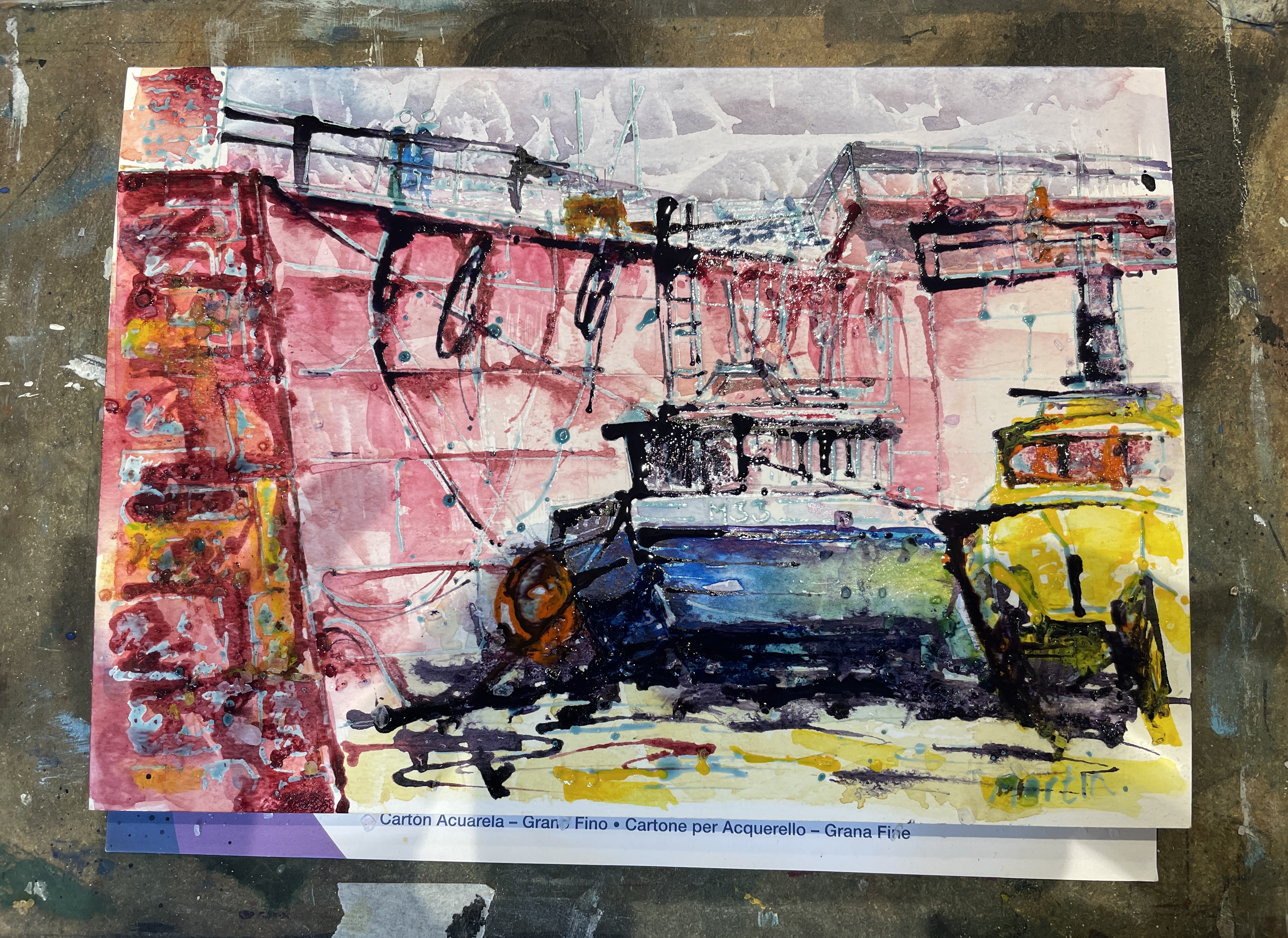
I removed the masking fluid, and I was left with stark white paper. As promised by Cathy the image had lightened significantly. I decided to leave the image overnight so I could review it with fresh eyes.
When the morning came I made some additions to the image as I wanted the blue boat to be the focal point of the picture and when I removed the masking fluid the emphasis on the boat had gone.
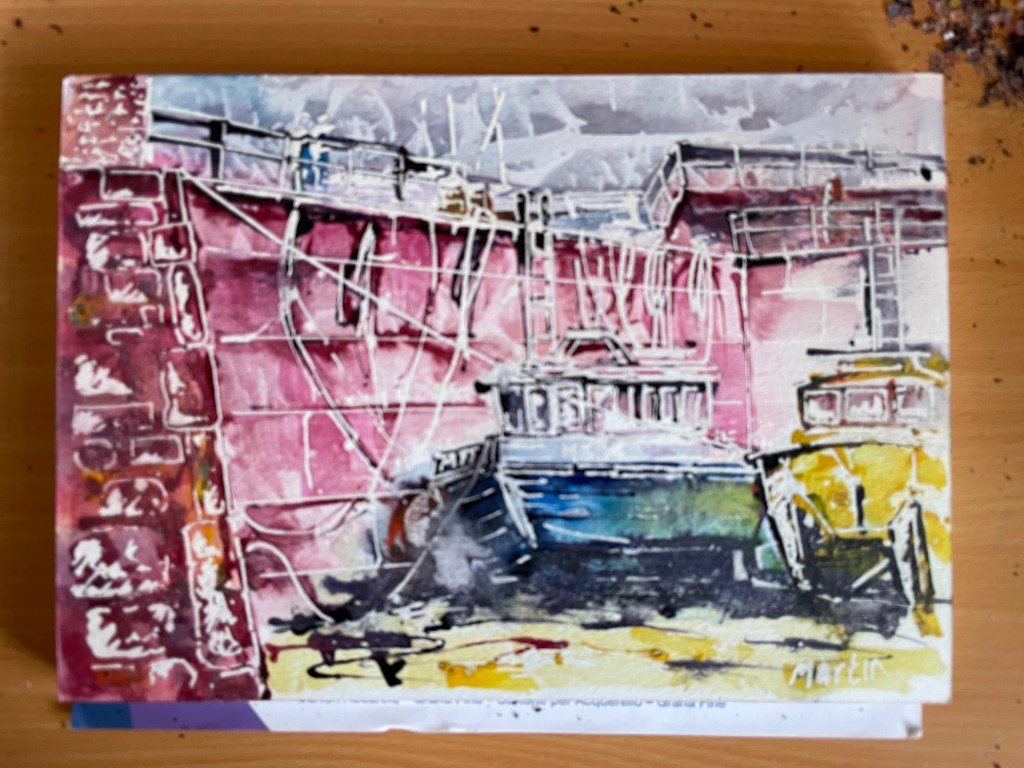
My takeaways – or ‘What I wish I’d know about masking fluid’
- Use fresh masking fluid – Cathy recommends Windsor and Newton
- Avoid blue masking fluid it may tint your paper ruining the masked areas
- Tilt the paper to the light to see the masking fluid as you add it
- Use a ruler on its edge to create straight lines
- Get a new bottle of masking fluid as soon as it starts to go gloopy
- Do not use heat on your painting (hair dryer) as this will cook the masking fluid
Conclusion
Will I be using masking fluid again? I can see the advantages of using masking fluid. And I like using a ruling pen. The effect is interesting, but I still find the stark white paper a distraction from my painting style. So, I will be using making fluid but more sparingly and not across the whole image!